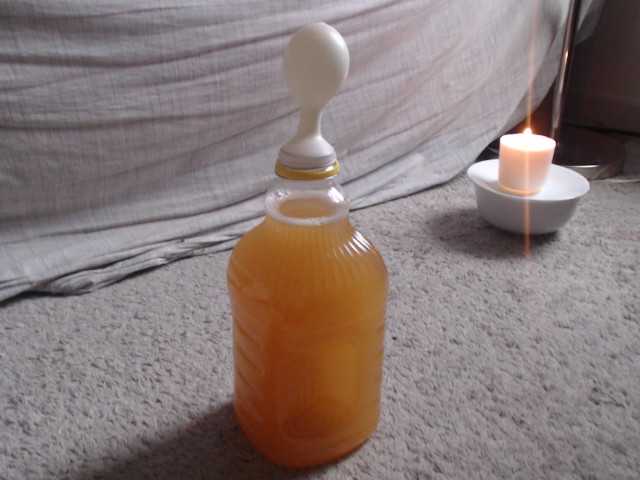
This is a tasty, wholesome, and traditional beverage. This is a guide to making cider (apple wine) with as little work or tools as possible. If you can buy bottles of apple juice with a screw-top lid rather than boxes, skip steps 1 and 2.
A note: warmer fermenting temperature means faster fermenting but more off-tastes, which take more time in aging to resolve. Similarly, increasing the sugar content will produce more off-tastes, so you need to deal with both an increased fermentation time and an extensive period of aging to resolve faults, perhaps 8 months or 12 months or more.
The brewer's formula: 19g sugar / liter = 1% ABV
Now is the point of finishing the process. Be careful not to cap the bottle immediately or you risk making a bottle bomb! After recapping the bottle, I unscrew and rescrew the lid two or three times a day (without removing the lid) until the bottle stops hissing. This tends to take a few days. An advantage of using plastic is you can squeeze the bottle to feel whether pressure has built up or not -- you can also slightly squeeze the bottle, screw on the lid, let go of the bottle, and slowly unscrew until the bottle can expand -- this is a good makeshift airlock, especially as it off-gasses.
If you want to carbonate your cider, once fermentation has ceased, add 5-10g of sugar and keep that lid on tight until it's time to enjoy.
Once the cider is clear (maybe 1-2 weeks after fermentation ends), it is ready to drink, and quite tasty. Throwing the cider in the fridge will help it clear faster. When pouring cider, take care to leave the yeasty sludge near the bottom behind. You can siphon to new, clean bottles at this point if you want to age your cider longer -- which improves flavour --make sure to siphon because oxygen spells the ruin of wines and beers.
This is also the point where you can add artificial sweetener, or very small amounts of fruit or honey immediately prior to drinking. You don't want to restart fermentation so you may want to kill the yeast if you want to age your cider with sweet things long term.
You can also concentrate your cider and increase the ABV% using a simple technique by freezing your cider and pouring off what immediately melts. Most of the water will stay behind; you can easily bump a cider up to 20% or 30% ABV without special equipment by doing this. Be warned that it will not taste as good as a properly distilled brandy and it will have more of the chemicals that lead to hangovers.